Our personal invitation
seriously,,,sort of
here is the link for this video:
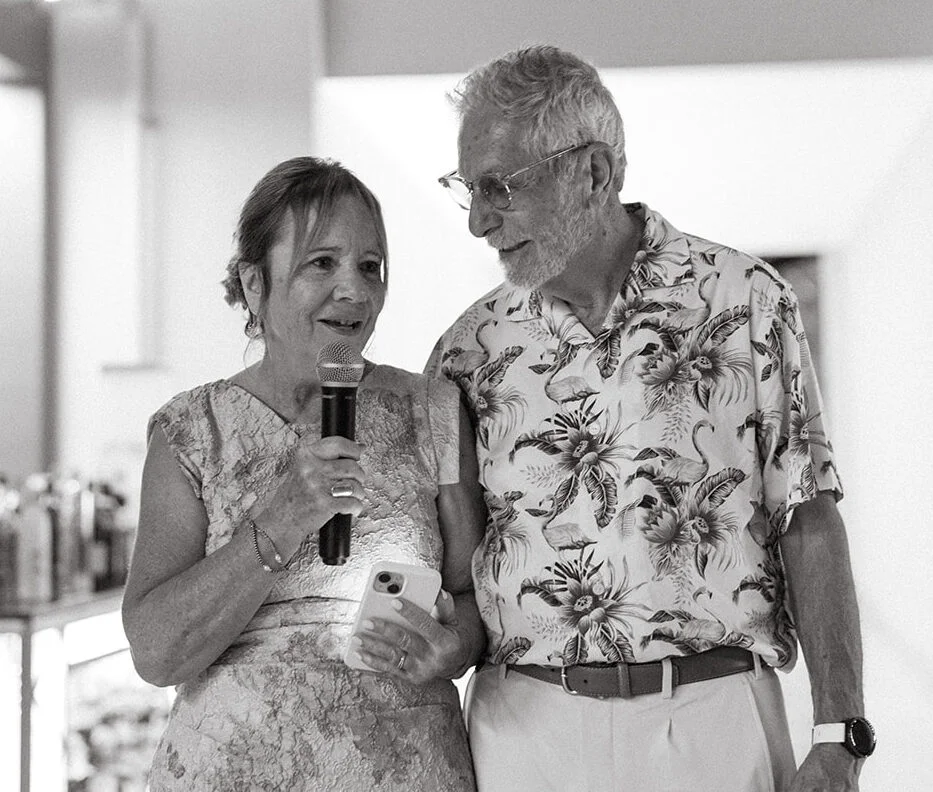
We got married in 1974, the fact that Christie was a Gentile and I was Jewish was not an issue to us. It was, however, an issue to my parents who were holocaust survivors and had lost all their family in Nazi Germany. They did not want their son marrying a Gentile girl that would lead him away from his Jewish faith. While Christie assured them that she had no religious affiliation that would persuade him contrary to their beliefs, God had other plans. One year later we became Christians. Now that my mother’s worst fear had come true, Christie decided to try to soften the blow of our conversion by acting interested in what they believed. At her first Passover celebration with my family in 1976, Christie had a divine encounter that took her completely by surprise. She found Jesus hidden in an ancient ceremony within the Passover called “Yahatz”, or “breaking” the afikoman. After that night, with an insatiable hunger to know Jesus, Christie began her long journey of looking for the revelation of Jesus and God’s heart in all the Biblical feasts. We hope that you will find more than information here, but also inspiration to help you on your journey of discovering God’s heart for His beautiful bride. We hope in time to continually add new content not only from us, but others whose hearts have been encountered by the Living God, the Holy One of Israel, the One Who has a bride made up of Jew and Gentile!
A sneak peak at the Feasts:
What is Purim?
A minor festival like Chanukah, Purim is about the deliverance of the Jewish people in the Book of Esther. This time deliverance comes through the intercession of Queen Esther who goes into the king’s chambers to ask a favor as his bride. She romances him by holding a banquet of wine where after receiving his love and favor, requests that the enemy, Haman, be hung on the gallows and the execution order to kill the Jews be revoked.
It is a prophetic picture of the theater in heaven during Jacob’s trouble on earth and bridal intercession in a wedding chuppah with Jesus praying for victory over the anti-christ and deliverance for the Jewish remnant in Jerusalem.
Can you tell me more about Passover?
The first spring feast (appointed time) initiated in Exodus as the time when God delivered the children of Israel out of bondage to Egypt. It is known as the time God came down to begin the courtship with His Bride, Israel. We see in Exodus 6:6-7, the four steps of redemption, (the four cups of wine we drink during the Passover Seder). We see the change in their identity from slaves, to sons and daughters by the blood of the Passover lamb on their dwellings, to priests and then to a Bride. First Moses led the Jewish people through this pattern of redemption and then,1500 years later, Jesus, a Prophet like Moses (Deut. 18:15), came down and fulfilled the same pattern to get His Bride…Jew and Gentile.
Passover is a picture of our redemption in Jesus. It is the first of the Jewish festivals listed in Leviticus 23. It marks the beginning of the Jewish religious year during the Hebrew month of Aviv (called Nissan after the Babylonian captivity). In Leviticus 23 it is called a ‘holy convocation, a Hebrew word that means rehearsal. It is to be acted out or “rehearsed” every year so we can remember God’s great work of salvation in our lives. By looking back we see His faithfulness and ways; by looking forward, we see the yet to be revealed and experienced aspect of His love; and, by looking at our hearts and lives in the light of our present circumstances, it allows us to feel His pleasure and ask for His help.
Just as the other festivals listed in Leviticus 23, Passover is an “appointed time”, a “moed”… an appointment on God’s holy calendar that, although He has fulfilled the spring feasts at His first coming, He desires to meet with us every year on these appointed times so we can enter into our own personal story of salvation and deliverance. The feasts are the “blueprint” of His plan of redemption. The former rain festivals like Passover are in the spring and refer to His first coming. The latter rain festivals are in the fall, referring to His second coming. Hosea 6:3 says, “He will come to us like the rain, the former and the latter rain and water the earth”.
What is the Feast of Unleavened Bread?
The biblical day that the children of Israel ate the lamb and left Egypt at midnight – 1500 years later, Jesus fulfilled it by being put into the grave.
What is Counting the Omer?
Counting the Omer marks the 49-day journey of the children of Israel from the shore of the Red Sea to Mount Sinai – 1500 years later, the Holy Spirit encounters the believing Jews in the upper room.
What is the Feast of First Fruits of the barley harvest?
The biblical day that the children of Israel crossed the Red Sea and came up the other side – 1500 years later, Jesus fulfilled it by being raised from the dead.
What is the Feast of Weeks (Shavuot)?
First fruits of the wheat harvest, children arrive at Mount Sinai, God reveals Himself as their Bridegroom, married to God; 10 commandments given – 1500 years later, Jesus give the believers the Holy Spirit in the upper room.
What is Teshuvah?
Turning or returning, 40 days of renewing intimacy with the Lord; removing barriers to loving God and being loved by Him; heart preparation for God’s next two appointments: Feast of Trumpets and Yom Kippur; being found righteous.
What is the Feast of Trumpets?
Beginning of the civil new year; wedding of the Messiah; resurrection of the dead; beginning of ten Days of Awe; day of judgement; coronation of a king; beginning of the events of Jesus second coming.
What is Rosh HaShannah?
See Feast of Trumpets.
What is the Feast of Yom Kippur?
Day of atonement; last days of Teshuvah – after this the heavenly gates close and the time of repentance is over.
What is Sukkot?
Sukkot (Feast of Tabernacles) is the most joyful of all the feasts. It is a week long party with the Lord and in community, dwelling in temporary booths (succahs) like God commanded in Lev.23:42. Once a year we are to leave the security of all we have and remember the days in the wilderness, when He provided the children of Israel with everything. We too, are to remember that all we have, has been given to us by God and that He is the sustainer of our lives. Sukkot is a prophetic picture of the wedding feast with Jesus in the future and the joy of all people, Jew and gentile, celebrating together! For a full teaching on this feast, read chapter four of my book, Watching and Waiting.
What are Shemini Atzeret & Simchat Torah?
Festival of the 8th day, an added day of rejoicing with the Lord and fellowship with His people; also rejoicing in the Torah – Jesus is the Word (Torah).
What is Chanukah?
Celebration of the restoration of God’s house from the defilement of the heathen nations – end time picture of the anti-Christ in Jerusalem before Jesus second coming.
Why is the New Moon of Nissan special?
This is the day God came down and started His heavenly calendar of appointments to get His Bride. Exodus 12:1 – This is a good time to begin having an understanding and orientation of the Hebrew calendar.
Why is the Sabbath special?
The weekly Sabbath is a gift of rest that God gave to man in Genesis 2:1. It is a proclamation before principalities and powers that a Day is coming when, 1) the world will be perfected, 2) the enemy and all evil will be gone and 3) face to face communion between man and God will be restored.
When is Havdalah?
At the end of the Sabbath, right before sundown that will begin the first day of the week, is a little ceremony called havdalah, meaning “separation”, to say goodbye to the Sabbath for another week.